



Brutalism, an architectural movement that emerged in the 1950s, is experiencing a powerful revival in both interior and outdoor design. Defined by the use of béton brut (raw, exposed concrete), this style celebrates the beauty of rugged surfaces, bold geometric forms, and material honesty.
Today, designing a garden or terrace in a brutalist style goes far beyond placing stone blocks—it means selecting elements that engage with nature through a rigorous, sculptural language.
1. The Pillars of Outdoor Brutalism
To effectively translate this aesthetic into outdoor spaces, three key principles should guide the design:
Monolithic Presence
Elements appear as single, solid, immovable volumes.
Material Texture
Surfaces are expressive. Rather than smooth, they reveal the marks of formwork, air pockets, or natural veining.
Essential Geometry
Design is stripped of excess, focusing on pure forms—cuboids, cylinders, and sharply defined volumes.
2. Cassero by Serralunga: Where Brutalism Meets Innovation
A compelling example of how brutalist aesthetics can be reinterpreted in a contemporary context is the Cassero collection by Serralunga.
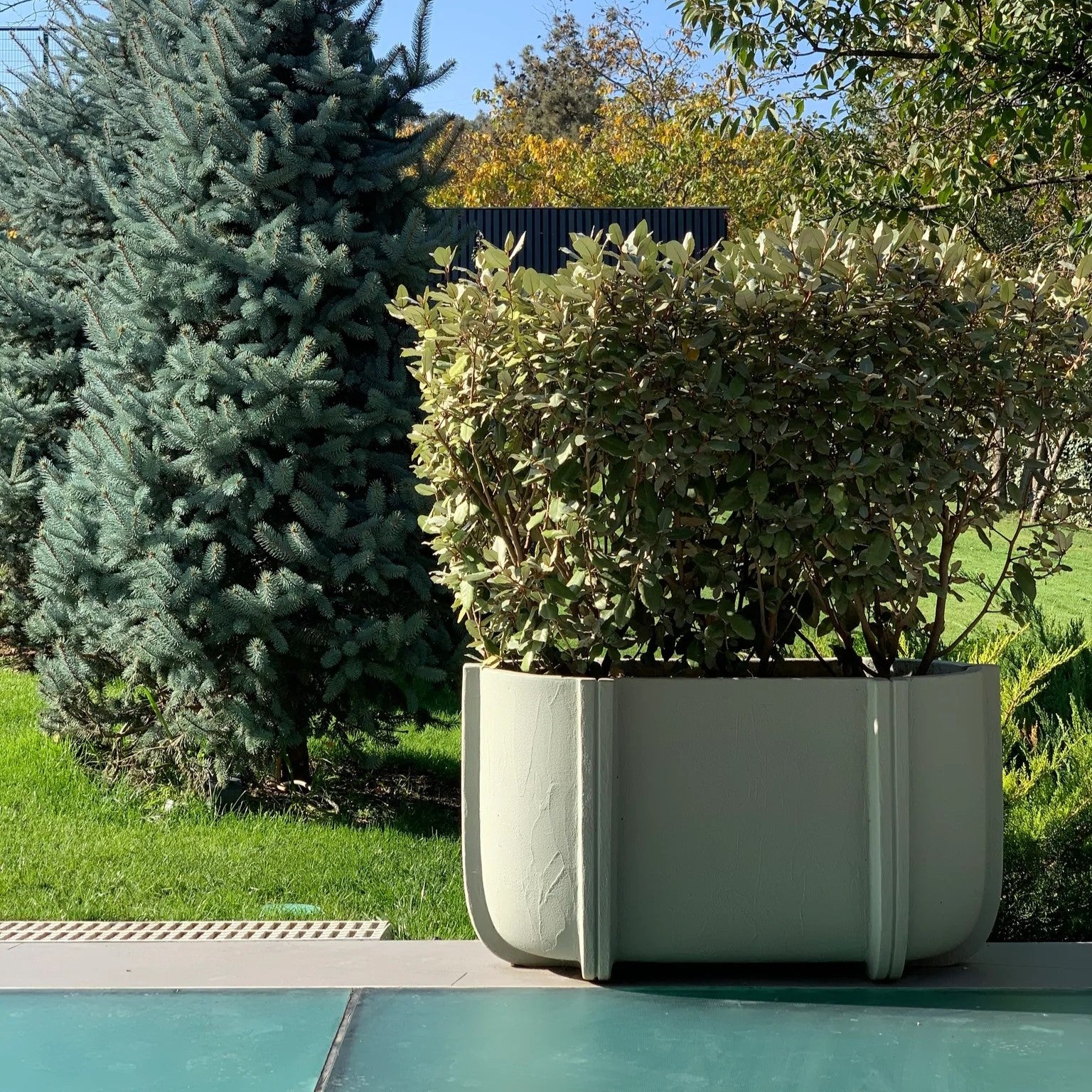
Designed by Patricia Urquiola, the Cassero line does not merely imitate concrete—it celebrates its production process. The name itself references the wooden formworks (“casseri”) used in construction to shape poured concrete.
Why does the Cassero collection redefine brutalist outdoor furniture?
Unlike traditional concrete, Serralunga products are made from high-quality polyethylene, offering superior performance for outdoor environments:
-
Wood-Grain Imprint
The surface captures the texture of wooden formworks, creating a remarkably realistic exposed-concrete effect. -
Lightweight Versatility
Despite their imposing, monolithic appearance, the planters are easy to move, allowing outdoor layouts to be reconfigured effortlessly. -
Total Resistance
Unlike concrete, which may crack under frost, polyethylene is highly durable and maintains its original colour even under prolonged UV exposure.
3. Designing a Brutalist Outdoor and Indoor Space
Achieving a professional result relies on contrast. The cool greys and solidity of concrete-effect planters should be balanced with organic elements:
-
Architectural Greenery
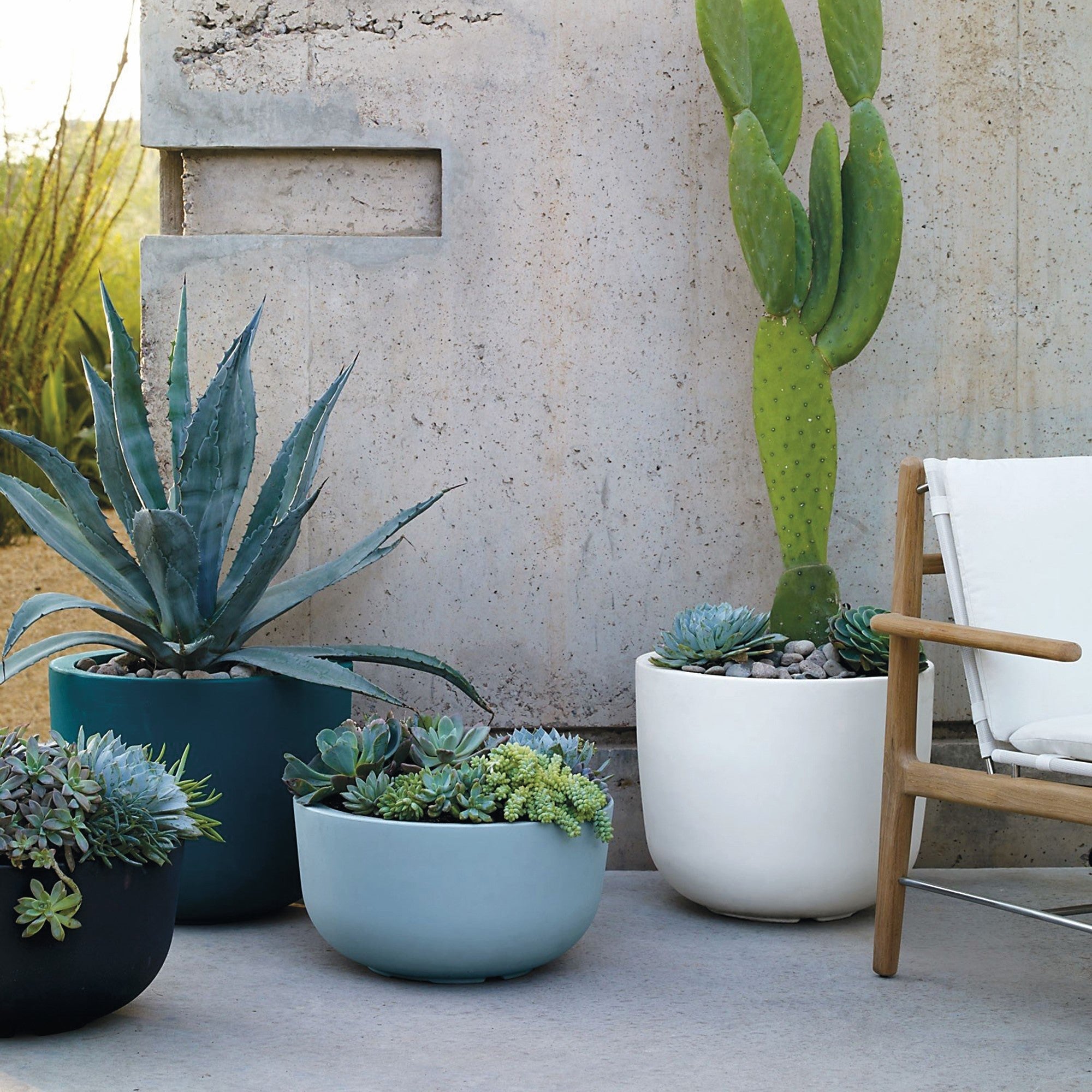
Choose plants with strong structures—such as agaves, cacti, or ornamental grasses (e.g., Miscanthus)—whose movement contrasts with the rigidity of the containers. -
Contrasting Materials
Pair Cassero planters with wooden decking or corten steel details to introduce warmth and depth. -
Grazing Light
Use low-angle lighting to enhance surface textures and highlight irregularities during evening hours.
FAQ on Brutalist Outdoor e Indoor Design
What is brutalist design applied to garden planters?
Brutalist design refers to furnishings that emphasise pure geometric forms and finishes reminiscent of raw concrete. In outdoor settings, this translates into planters and containers with a solid, monumental, and tactile presence.
Why choose polyethylene concrete-effect planters over real concrete?
Polyethylene planters, such as those in the Serralunga collection, offer superior durability. They are non-porous (so they do not absorb stains), resistant to extreme temperatures without cracking, and significantly lighter—making them ideal for terraces and rooftop spaces.
What colours define brutalist outdoor furniture?
The palette is dominated by greys—Grey, Urban Grey, Anthracite—but may also include earthy or sandy tones, provided they retain a matte, non-reflective finish typical of natural or industrial materials.
Is the Cassero collection by Patricia Urquiola suitable for indoor use as well?
Yes. Urquiola’s refined design makes these planters ideal for open-plan interiors, lofts, or industrial-style offices, where they function as both sculptural objects and plant containers.