
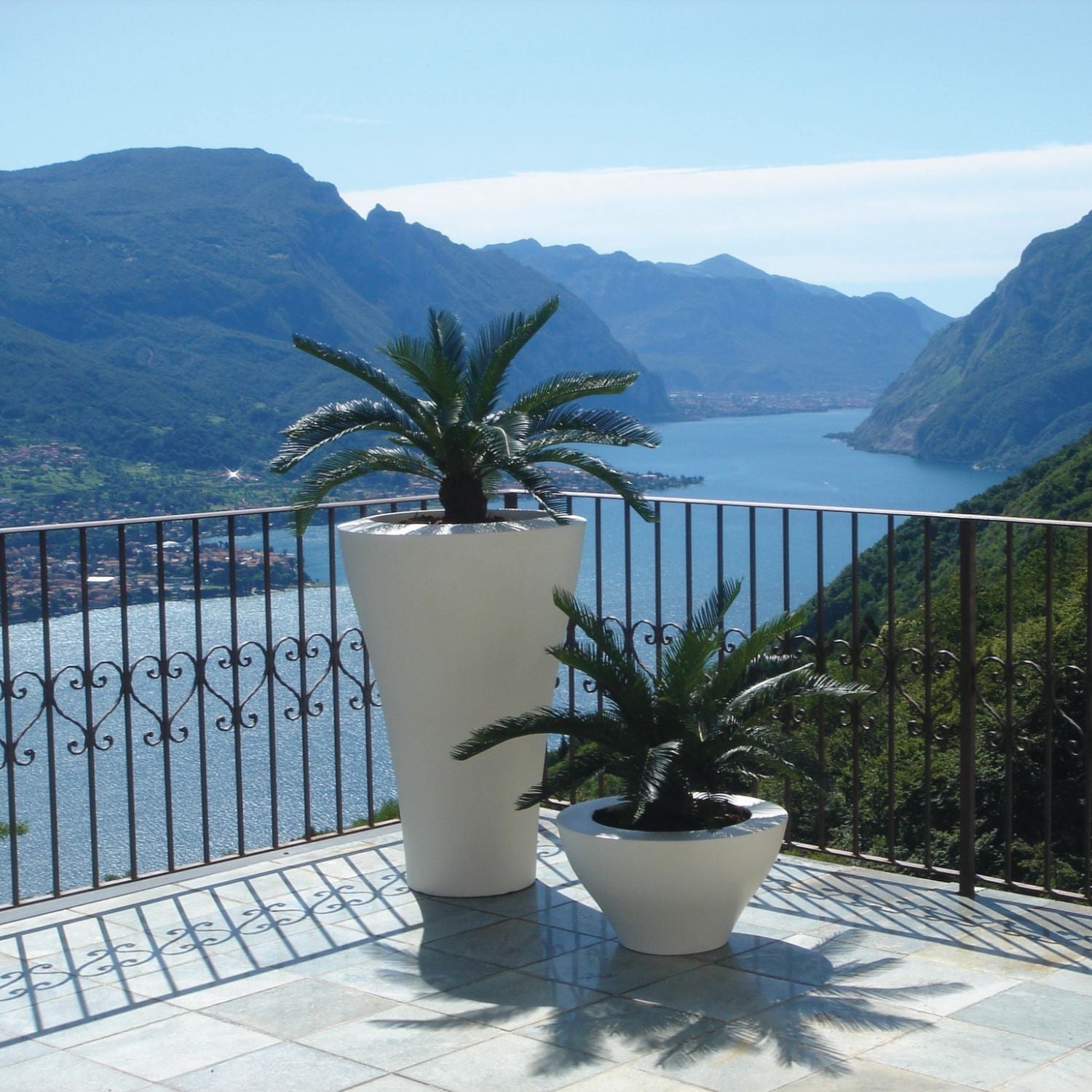
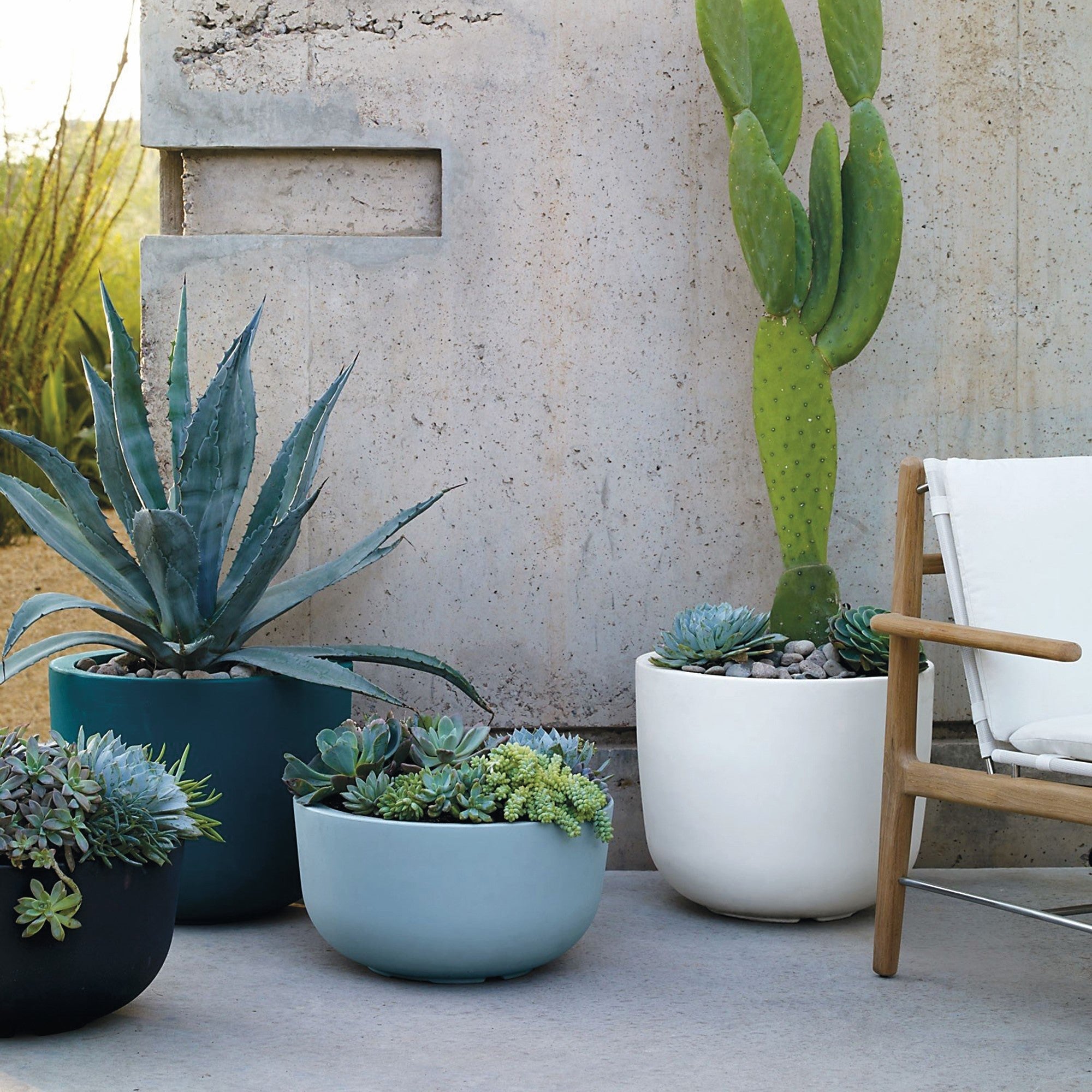
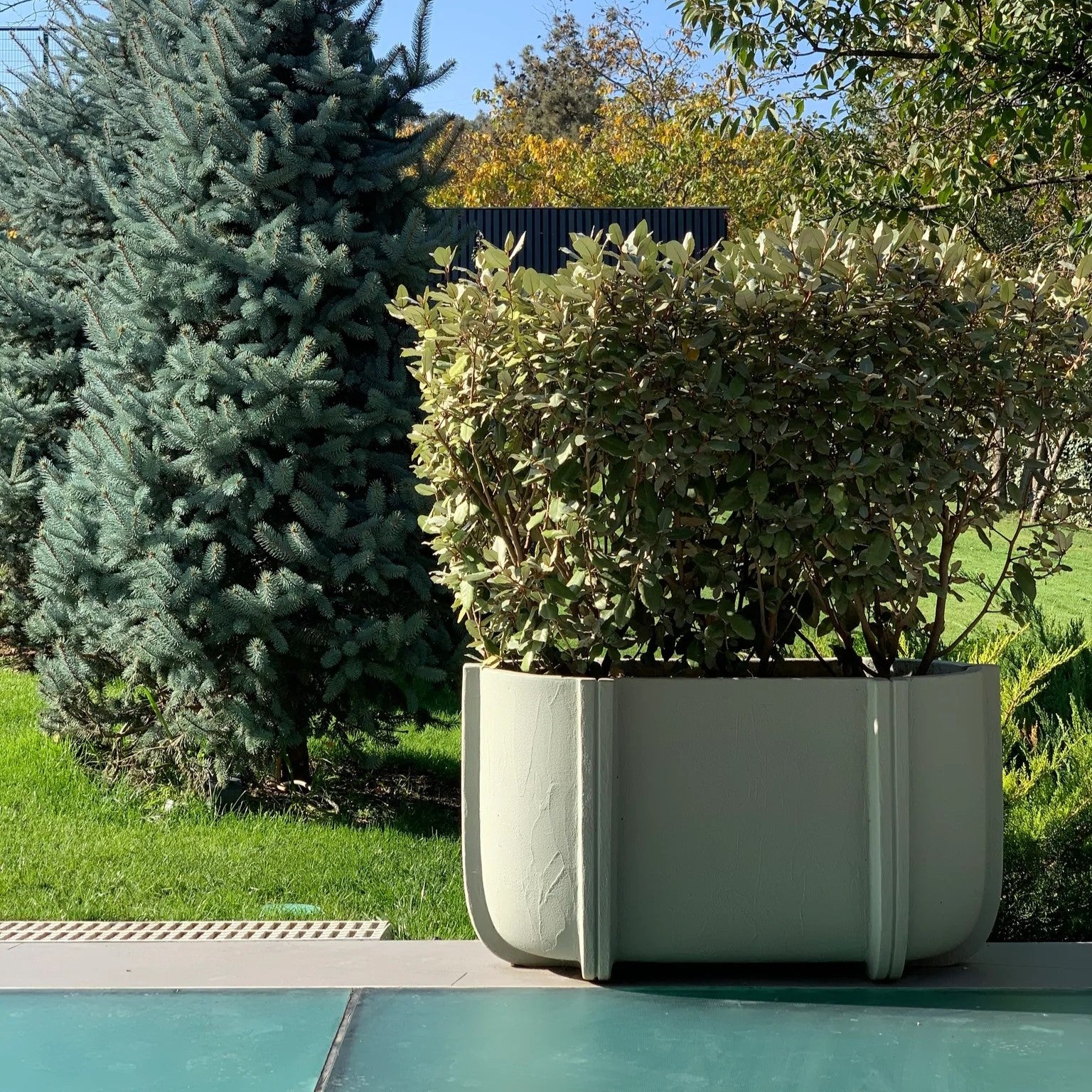

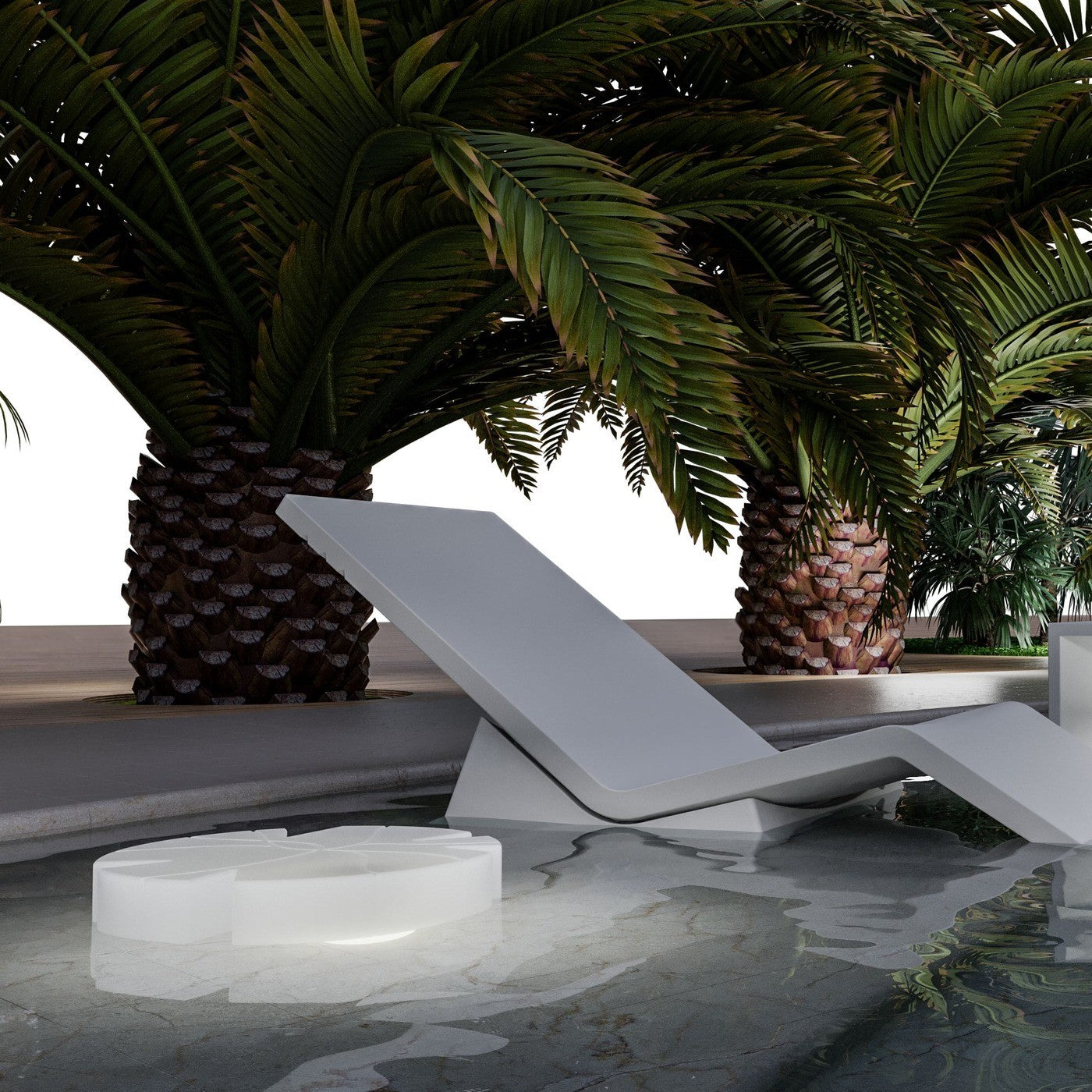

Creating more intimate areas on a terrace without completely closing off the space is one of the most common needs in contemporary outdoor living. A divider planter for a terrace makes it possible to separate lounge areas, dining spaces, or walkways while maintaining visual lightness, architectural continuity, and the presence of greenery.
In modern outdoor design, divider planters are no longer simple containers for plants: they become true furnishing elements, able to define geometries, improve privacy, and enhance private terraces, rooftops, dehors, and hospitality spaces.
Among the most interesting solutions are Serralunga’s Waffle collections, characterised by a contemporary three-dimensional texture and a design language able to interact with modern architecture and sophisticated outdoor environments.
It is an ideal solution when the terrace has irregular geometries or when a softer, less linear division is desired.
Why choose a divider planter for a terrace
A divider planter allows you to:
• create privacy without walls or invasive screens
• separate functional areas of the terrace
• introduce greenery in an architectural way
• improve the perception of space
• partially protect against wind and outside views
• enhance residential terraces and B2B environments
Compared with traditional dividers, greenery adds dynamism, visual comfort, and greater integration with the outdoor setting.
The elongated shape makes it possible to:
• define lounge areas
• create visual pathways
• screen outdoor tables
• define relaxation areas without weighing down the space
Serralunga divider planters with strong architectural impact
Vaso Rettangolare O/E design Serralunga
The Vaso Rettangolare O/E is a long, narrow planter that can create environments and divide others. A green divider, like a doorway between indoors and outdoors. A beautiful piece of contemporary and functional garden furniture.
Waffle Long design Fumie Shibata
Waffle Long is a particularly effective solution for those who want to create elegant and contemporary divisions on a terrace.
Cassero collection Patricia Urquiola planter
The Cassero collection Patricia Urquiola planter was inspired by the moulds used in construction for concrete casting. The result is a monobloc planter with a textured surface and a brutalist identity, capable of transforming greenery into a true design gesture.
-
Cassero Long
Cassero Long interprets the language of contemporary architecture through an oval planter that combines a concrete-effect aesthetic with material innovation, becoming a furnishing element able to interact with terraces, rooftops, and sophisticated indoor spaces. -
Cassero Slim
With its smaller dimensions compared with the Long version, Cassero Slim is more flexible and adaptable to different architectural situations.
Fence Planter design Raffaella Mangiarotti
Bringing a touch of Provence into the traditional form of wood defines the design of the Fence planter. A planter resembling a fence, which reinterprets the classic flower box in a modern key while creating privacy and intimacy. A light pattern characterises the surface, giving it a three-dimensional appearance. The Fence planter adapts easily to any style and setting.


Where to use a long divider planter
Divider planters can be used in many different contexts:
Residential terraces
Perfect for separating:
• dining area
• relaxation area
• sun deck
• barbecue space
Contemporary rooftops
In urban settings, they help to:
• create privacy
• manage flows
• add greenery without structural works
Hotels and hospitality
Long planters are often used to:
• define dehors
• create pathways
• organise lounge areas
• improve guest comfort
Large balconies
They make it possible to transform a linear balcony into a more structured and welcoming space.
The role of greenery in separating spaces
The choice of plants is essential to achieving the desired result.
For greater privacy
You can use:
• non-invasive bamboo
• ornamental grasses
• compact evergreen plants
For a Mediterranean look
Very interesting options include:
• ornamental olive trees
• lavender
• rosemary
• agaves
For contemporary terraces
Good choices include:
• strelitzia
• phormium
• architectural cacti
• tropical varieties
• modular compositions
• dynamic separations
• personalised green corners
• flexible configurations
It is an ideal solution when the terrace has irregular geometries or when a softer, less linear division is desired.
How to create an elegant separation without closing off the terrace
One of the most common mistakes is using dividers that are too invasive, reducing both light and the perception of space.
Design planters, on the other hand, allow you to:
• maintain visual depth
• filter the view naturally
• create architectural rhythm
• preserve brightness and airiness
The alternation of solids, voids, and vegetation makes the environment more balanced and refined.
Design ideas for contemporary terraces
Lightweight “green wall” effect
Use several planters aligned with tall plants that remain visually light.
Dining / relaxation area division
A linear composition makes it possible to separate functions without interrupting the continuity of the terrace.
Architectural pathways
Planters can accompany movement and naturally guide the perception of space.
Mix of materials and textures
The surfaces of all these planters interact beautifully with:
• concrete
• wood
• stone-effect porcelain stoneware
• metal
• outdoor lighting
Indoor + Outdoor: stylistic continuity
Serralunga’s divider planter collections can also be used in contemporary indoor spaces, especially in:
• showrooms
• receptions
• restaurants
• open-plan spaces
• offices
This makes it possible to create aesthetic continuity between indoors and outdoors, something increasingly sought after in contemporary architecture.
Mistakes to avoid when choosing a divider planter
Choosing disproportionate dimensions
A planter that is too small risks losing its scenic presence.
Using plants unsuitable for the exposure
Sun, wind, and resistance to temperature changes must be carefully considered.
Creating separations that are too closed
The goal should be to define spaces without making them feel heavy.
Not considering the architectural context
The planter should interact with the flooring, furnishings, and materials already present on the terrace.
Design approach: the terrace as a space to be lived in
Today, the terrace is no longer perceived as an accessory space. It is an extension of contemporary living.
FAQ – Divider planters for terraces
Are divider planters suitable for separating a terrace without closing it off?
Yes. A divider planter allows you to create more intimate areas while preserving light, air and visual continuity. It is an ideal solution when you want more privacy without the rigid effect of a wall or screening panel.
Is a long planter or a large single planter better?
It depends on the space. A long planter such as Waffle Long is better suited to creating clean dividing lines and orderly separations. A large planter such as Waffle 65 is useful for enhancing corners, creating focal points or adding rhythm to a green composition.
Can Waffle planters also be used indoors?
Yes. Waffle Long is described as suitable for terraces, gardens, dehors, entrances, halls and contemporary indoor settings. This makes it possible to create aesthetic continuity between indoor and outdoor spaces.
Why is the honeycomb texture interesting in outdoor design?
The honeycomb texture creates depth, rhythm and plays of light. On a terrace, this surface makes the planter more decorative and less static, transforming it into an architectural element as well as a functional one.
Which plants should be used to increase privacy on a terrace?
To increase privacy, it is best to choose plants with vertical growth or dense foliage, such as evergreen shrubs, tall ornamental grasses or non-invasive bamboo. The choice should always be calibrated according to exposure, wind, irrigation and the actual size of the planter.
Is a divider planter also suitable for restaurants and dehors?
Yes. In dehors, rooftop spaces and restaurants, divider planters help separate tables, guide circulation and make the space feel more welcoming. They are useful because they organise the setting without requiring invasive structural work.